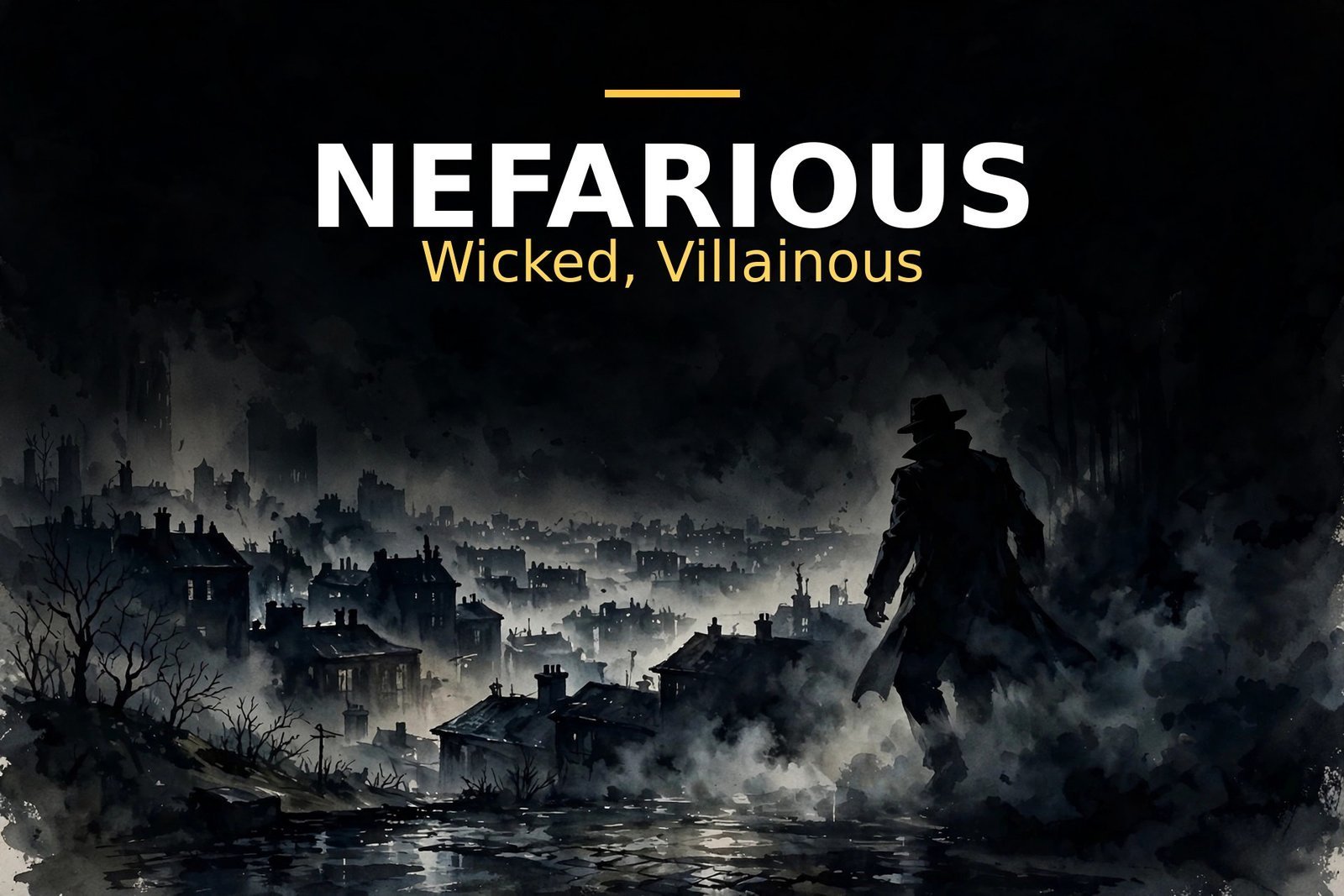
Short meaning: Nefarious (adjective) means wicked, villainous, or criminal – describing actions, schemes, or characters of a thoroughly evil nature.
The Full Definition: Wickedness With Intent
Nefarious denotes flagrant, deliberate wickedness. A nefarious plot is not merely bad – it is sinister, scheming, and calculated. The word attaches itself to conspiracies, frauds, betrayals, and corruption: wrongdoing with a plan behind it.
Notice what it doesn’t describe: accidents, minor misdeeds, or impulsive mistakes. You wouldn’t call a parking ticket nefarious. The word is reserved for villainy that took effort – the embezzlement scheme, the rigged election, the betrayal plotted over months. When English wants wrongdoing to sound dramatic, it reaches for nefarious.
Etymology: A Crime Against Divine Law
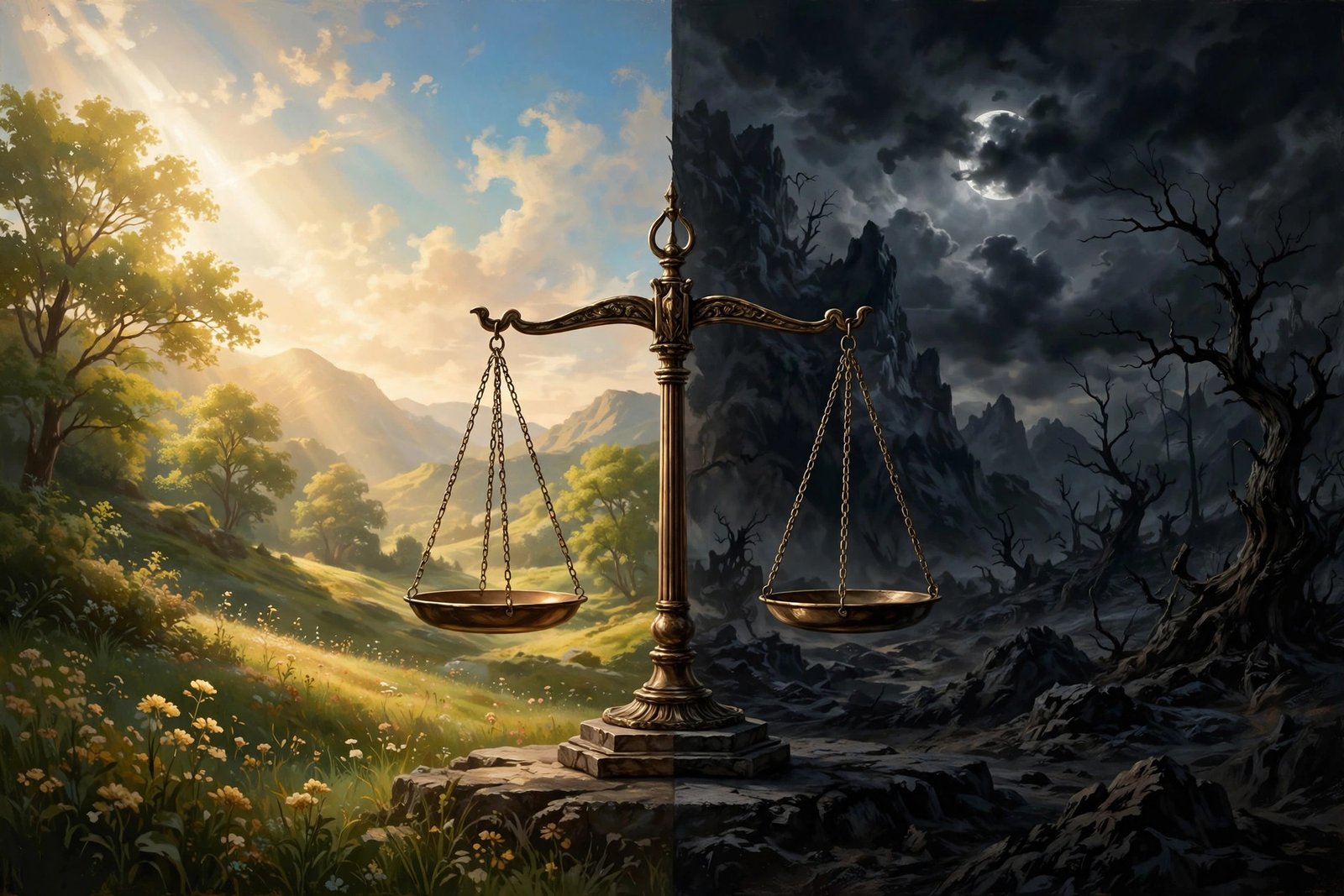
Few English words carry such an unbroken villainous pedigree. Nefarious comes from Latin nefarius (“wicked, impious”), built on nefas – literally “wrong” or “sin,” specifically a crime against divine law. Break nefas down further and you get ne- (“not”) + fas (“divine law, that which is right before the gods”).
So at its root, nefarious doesn’t just mean “bad” – it means against the very order of the sacred. The Romans used it for sacrilege and unspeakable crimes. English adopted it in the early 1600s, and four centuries later it still carries that classical gravity. When a journalist writes “nefarious dealings,” they’re unconsciously invoking a Roman courtroom.
Nefarious in Literature and Formal Writing
This is where the word truly lives. Nefarious is a staple of gothic novels, political journalism, legal commentary, and historical writing – anywhere wrongdoing needs weight:
- In Victorian sensation fiction, villains hatch “nefarious schemes” behind manor walls.
- In modern investigative reporting, “nefarious actors” describes hackers, fraudsters, and corrupt officials.
- In courtroom rhetoric, calling conduct “nefarious” signals not just illegality but moral rot.
The word elevates its subject. A “bad plan” is forgettable; a “nefarious plot” demands a detective. Writers choose it precisely for that theatrical charge – it turns wrongdoing into villainy.
It also appears in historical writing with particular force. Historians describing, say, the Gunpowder Plot or Watergate reach for nefarious because the word carries a moral verdict inside it – not just “illegal,” but profoundly wrong. That built-in judgment is what separates it from neutral terms like “illicit” or “unlawful,” which describe the act without condemning the soul behind it.

Real Usage Examples
- “The detective spent two years unraveling the CEO’s nefarious scheme.” (journalism)
- “Rumors of nefarious dealings swirled around the campaign for months.” (political reporting)
- “In every fairy tale, the villain hatches a nefarious plot in a dark tower.” (literary)
- “The hacker’s nefarious activities spanned three continents before Interpol caught up.” (true crime)
- “Behind the charity’s respectable facade lurked nefarious intentions.” (narrative nonfiction)
- “Okay, what’s your nefarious plan for getting us out of this meeting early?” (playful, casual – deliberately overdramatic)
Nefarious vs. Diabolical vs. Sinister
These three villain-words get mixed up constantly. Here’s the real distinction:
- Nefarious emphasizes the scheme – calculated, conspiratorial wickedness. Think plots, frauds, cover-ups. (“a nefarious conspiracy”)
- Diabolical emphasizes devilish flair – evil with showmanship and cruelty. Think cackling villains and ingenious cruelty. (“a diabolical trap”)
- Sinister emphasizes the threatening atmosphere – evil you can feel but can’t quite see. Think ominous shadows and bad vibes. (“a sinister silence”)
A useful shorthand: nefarious plans, diabolical laughs, sinister looks. They’re near-synonyms with different dramatic jobs.
Synonyms and Antonyms
Synonyms:
– Wicked – morally evil (the everyday equivalent)
– Villainous – like a storybook villain
– Iniquitous – grossly unjust (formal, legal flavor)
– Unscrupulous – without moral restraint
– Corrupt – rotted by dishonesty, especially in power
Antonyms:
– Virtuous – morally excellent
– Noble – honorable and upright
– Benevolent – kindly, well-meaning
Tone and Register: When to Reach for It
Nefarious is formal and literary. It belongs in journalism, literature, essays, and serious discourse. In casual conversation it sounds deliberately theatrical – which is exactly why people use it playfully (“my nefarious plan to eat the last slice”).
The golden rule: match the word’s weight to the crime’s weight. Reserve nefarious for wickedness that is deliberate and significant. Calling a minor fib “nefarious” is like using a sledgehammer to hang a picture – technically possible, comedically wrong.
One more note on usage: nefarious almost always modifies nouns of action or character – nefarious scheme, nefarious activities, nefarious purposes, nefarious character. You rarely see it describing objects or weather. It needs a doer behind it, which is exactly why it sounds so accusatory: the word itself points a finger.
Frequently Asked Questions
What does “nefarious” mean in simple terms?
Wicked or villainous – deliberately evil, especially in schemes, plots, or conspiracies.
What is the full nefarious definition?
An adjective describing flagrantly wicked conduct: calculated wrongdoing such as fraud, conspiracy, or corruption.
Nefarious vs. diabolical – what’s the difference?
Both mean wicked, but nefarious stresses scheming, conspiratorial villainy while diabolical stresses devilish flair and cruelty.
How do you use “nefarious” in a sentence?
“The committee exposed the treasurer’s nefarious bookkeeping.” – use it for deliberate, significant wrongdoing.
Where did “nefarious” come from?
Latin nefarius (“wicked”), from nefas – a crime against divine law. It entered English in the early 1600s.
Is “nefarious” formal or casual?
Formal and literary. In everyday speech, “shady,” “sketchy,” or “evil” is more natural – though playful overdramatic use is common.
Key Takeaway
Nefarious is villainy with a vocabulary – the word English reaches for when wrongdoing is calculated enough to deserve drama. Four hundred years after Rome, it still sounds like a verdict.

Hi, I’m Mia Walker, a Content Research Writer at Hublioo.com with 3+ years of experience in creating educational language content.
I enjoy breaking down complex words, internet slang, abbreviations, and everyday expressions into clear, practical explanations that anyone can understand.
My focus is on delivering original, easy-to-read, and well-organized content that helps readers expand their vocabulary and use English with greater confidence.