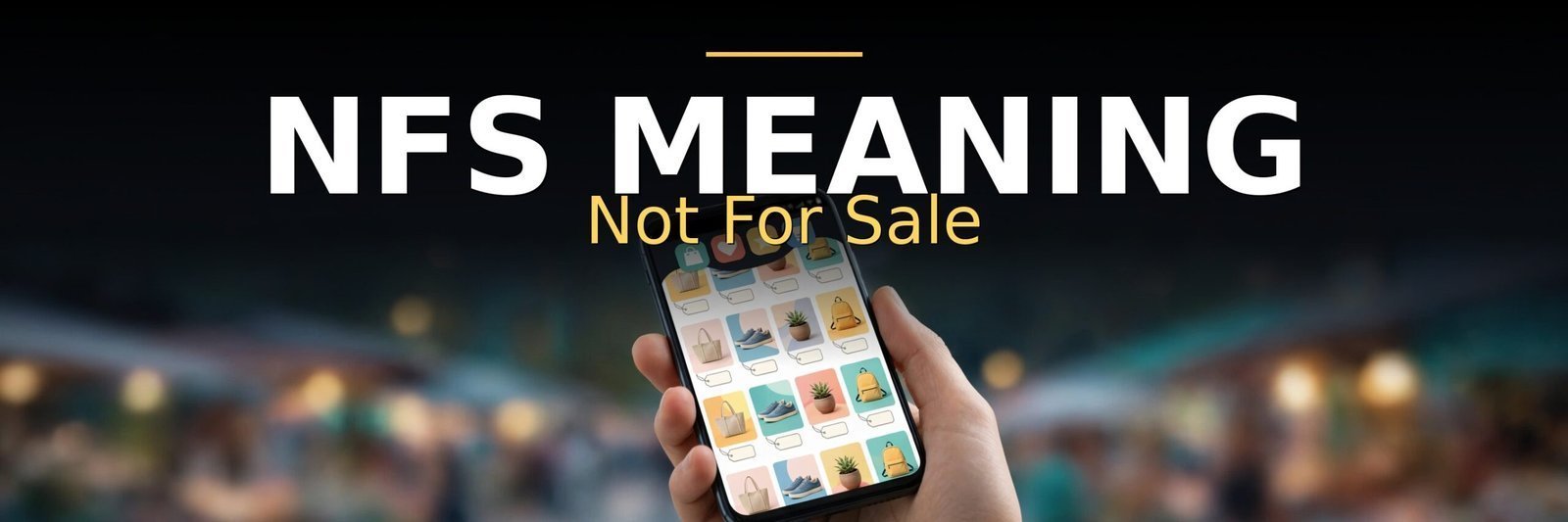
NFS most commonly stands for “Not For Sale” — used in marketplaces and posts to signal an item isn’t available for purchase. In texting slang, it can also mean “No Funny Sh*t” (as in: be serious with me).
Same three letters, two completely different worlds. Here’s how to tell them apart.
Where NFS Came From
“Not for sale” is centuries-old commercial English — shopkeepers have been hanging metaphorical NFS signs forever. But the initialism NFS earned its digital life in the 2000s, when online marketplaces like eBay, Craigslist, and later Facebook Marketplace and Depop made character-limited titles the norm. Sellers needed a tiny tag that preempted the inevitable “is this available?” messages — and NFS was born.
The second meaning, “no funny sh*t,” grew up independently in texting’s bluntness culture, where directness is a virtue and syllables are expensive. Two separate births, one abbreviation — which is why NFS is a masterclass in why context matters.
NFS at a Glance
| Primary meaning | Not For Sale |
| Slang meaning | No Funny Sh*t (= be serious) |
| Gaming meaning | Need For Speed (racing franchise) |
| Where it lives | Marketplaces, Instagram posts, group chats |
| Tone | Neutral (marketplace) / blunt (texting) |
| Biggest confusion | Assuming the wrong meaning for the setting |
The Two Faces of NFS
Face 1: “Not For Sale” — the marketplace guardian
This is the meaning you’ll encounter 90% of the time. It appears on marketplace listings, collection posts, and forums: “Posting my sneaker collection — NFS” means “admire all you want, but I’m not selling.” Sellers also tag already-sold or display-only items NFS to stop the message flood. On Facebook Marketplace and Depop, it’s practically punctuation.
Face 2: “No Funny Sh*t” — the seriousness demand
In heated or blunt chats, NFS drops the commerce and picks up an edge: “NFS, did you actually finish it?” translates to “be straight with me — no jokes, no dodging.” It’s a conversational speed bump that says this part matters. Informal, mildly profane, and strictly for people you’re comfortable being direct with.
The bonus face: “Need For Speed”
In gaming contexts, NFS is the beloved racing franchise: “New NFS just dropped!” If the conversation involves cars going very fast, this is your meaning.
NFS vs FS: Know the Pair
NFS has a natural opposite, and marketplaces run on the pair:
| Tag | Stands for | What it signals |
|---|---|---|
| NFS | Not For Sale | Display only — don’t ask to buy |
| FS | For Sale | Available — DM with offers |
You’ll also see NFT (no further trade / not for trade) in collector communities, which sits close to NFS in spirit. Learning the pair saves everyone time: sellers stop getting asked, buyers stop asking.

NFS in Real Conversations
- “Posting my sneaker collection — NFS, sorry! 👟”
- “Is this still available?” — “NFS, it’s my personal piece.”
- “NFS — are you actually coming tonight or not?” (= no funny sh*t, be straight)
- “That car in your pic — NFS? It’s beautiful.” (= asking if it’s for sale)
- “New NFS game just dropped, who’s in?” (= Need for Speed)
- “Just showing off the setup. NFS, before anyone asks 😄”
How to Reply to “NFS”
- Marketplace NFS (“not for sale”): Respect it. “All good, it’s a beauty!” — don’t haggle; the tag exists precisely to end that conversation before it starts. If you must ask, one polite “if you ever sell, lmk” is the max.
- Someone asks YOU “NFS?” (is it for sale?): Answer plainly — “yeah, open to offers” or “nah, personal collection.”
- Texting NFS (“no funny sh*t”): Drop the jokes and answer straight. “Okay okay — yeah, I finished it, here’s what happened…” The person is asking for honesty, so give it.
Is NFS Rude?
Split verdict — because there are two NFSs:
- “Not for sale” is perfectly polite. It’s informational, like a price tag. No one has ever been offended by NFS on a listing.
- “No funny sh*t” is direct, which reads as rude only if the relationship doesn’t support directness. Fine with close friends; don’t deploy it on your boss, your grandmother, or anyone you’re trying to impress.
The profanity is mild, but the bluntness is real. Match it to the friendship.

Similar Words and Opposites
Synonyms — by meaning:
- Not for sale → “display only,” “not available,” “just showing,” “personal collection”
- No funny sh*t → “for real,” “seriously,” “no cap,” “be honest,” “deadass”
Antonyms — the flip side:
- Not for sale → “for sale” (FS), “available,” “DM to buy,” “open to offers”
- No funny sh*t → “just kidding,” “jk,” “lol nvm”
Frequently Asked Questions
What does NFS mean in texting?
Usually “Not For Sale.” In blunt, direct conversations it can mean “No Funny Sh*t” (be serious with me).
What does NFS mean on Facebook Marketplace?
“Not For Sale” — the item is display-only, part of a personal collection, or already gone. It’s there to preempt “is this available?” messages.
What does NFS mean on Instagram?
Same as Marketplace: typically “not for sale” on posts showing off collections, setups, or personal items the poster has no intention of selling.
Is NFS rude?
“Not for sale” is never rude — it’s just information. “No funny sh*t” is blunt rather than rude; it’s fine with friends but too direct for formal or professional settings.
What’s the difference between NFS and FS?
They’re opposites: NFS = not for sale (don’t ask), FS = for sale (please ask). Marketplaces run on this pair.
How do I reply when someone marks something NFS?
Respect the tag — admire, don’t haggle. A single polite “lmk if you ever sell” is acceptable; anything more ignores what the tag is for.
Conclusion
NFS is commerce and candor in three letters — “Not For Sale” for the marketplace, “No Funny Sh*t” for the group chat. Read the setting first, and you’ll always land on the right one.
Explore more: FS Meaning • No Cap Meaning

Hi, I’m Mia Walker, a Content Research Writer at Hublioo.com with 3+ years of experience in creating educational language content.
I enjoy breaking down complex words, internet slang, abbreviations, and everyday expressions into clear, practical explanations that anyone can understand.
My focus is on delivering original, easy-to-read, and well-organized content that helps readers expand their vocabulary and use English with greater confidence.