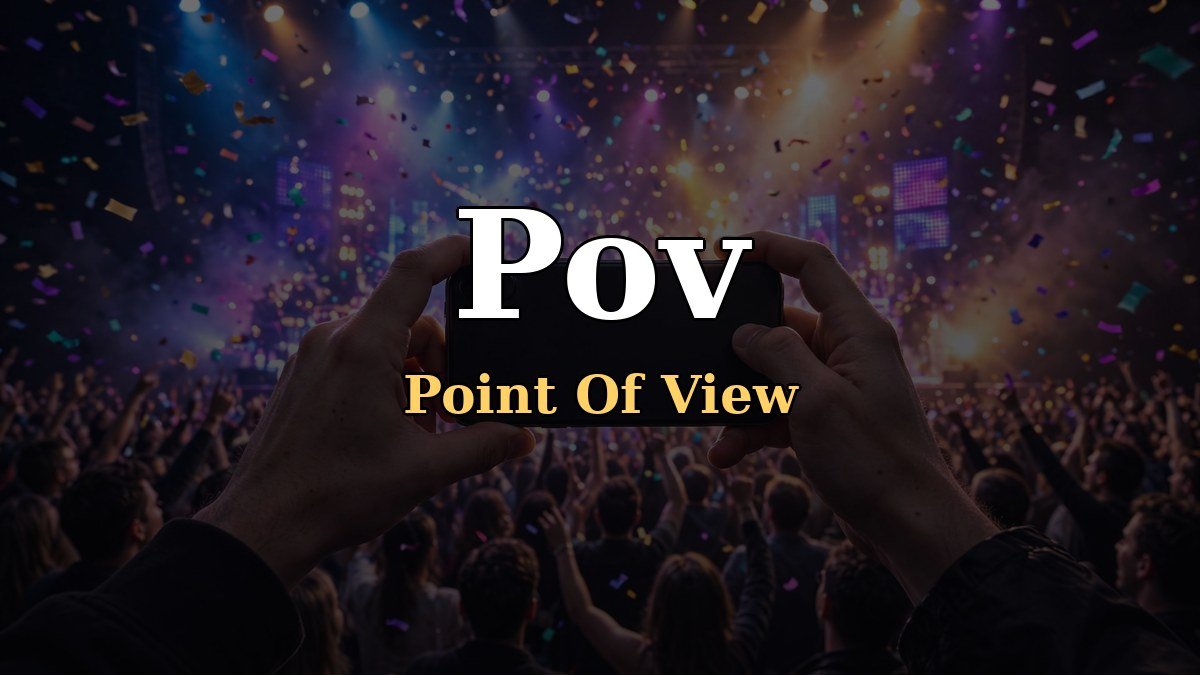
- Stands for: point of view
- TikTok meaning: a video filmed from the viewer’s eyes, casting them in a scenario
- Texting meaning: someone’s opinion or perspective (“from my POV”)
- Ideal video length: 15 to 30 seconds
- Trend started: around 2020 on TikTok
What Does POV Stand For?
POV = Point Of View. In plain English, it means the position from which something is seen or considered. Writers have used “point of view” for centuries to describe narration. The internet just shortened it and gave it a camera.
Merriam-Webster lists POV as an abbreviation, and the concept behind it – perspective – is one of the oldest storytelling tools there is.
POV on TikTok: How the Trend Took Over
Around 2020, TikTok creators started labeling videos “POV:” followed by a scenario: “POV: you’re the new kid on the first day of school.” The camera films the scene from the viewer’s eyes, and suddenly you are not watching a story, you are in it.
The format exploded because it is endlessly flexible. Anyone with a phone can make one, no acting skills required. By 2021, POV was one of TikTok’s defining formats, spawning millions of videos across comedy, romance, horror, and everyday relatable moments.
The Two Kinds of POV Videos
Not all POVs work the same way. There are two main flavors:
1. Literal POV: the camera shows what the character sees. “POV: you wake up late for work” films the alarm clock, the rush, the traffic, all from first-person view. You are the camera.
2. Roleplay POV: the creator acts as a character talking to you. “POV: the teacher catches you cheating” has the creator playing the teacher, staring into the lens, and you play the student. You are the audience, cast in a role.
Both use the same label, and viewers figured out the difference instantly. The format is intuitive because real life already works this way: sometimes you are the camera, sometimes you are being watched.
How to Make a POV Video That Works
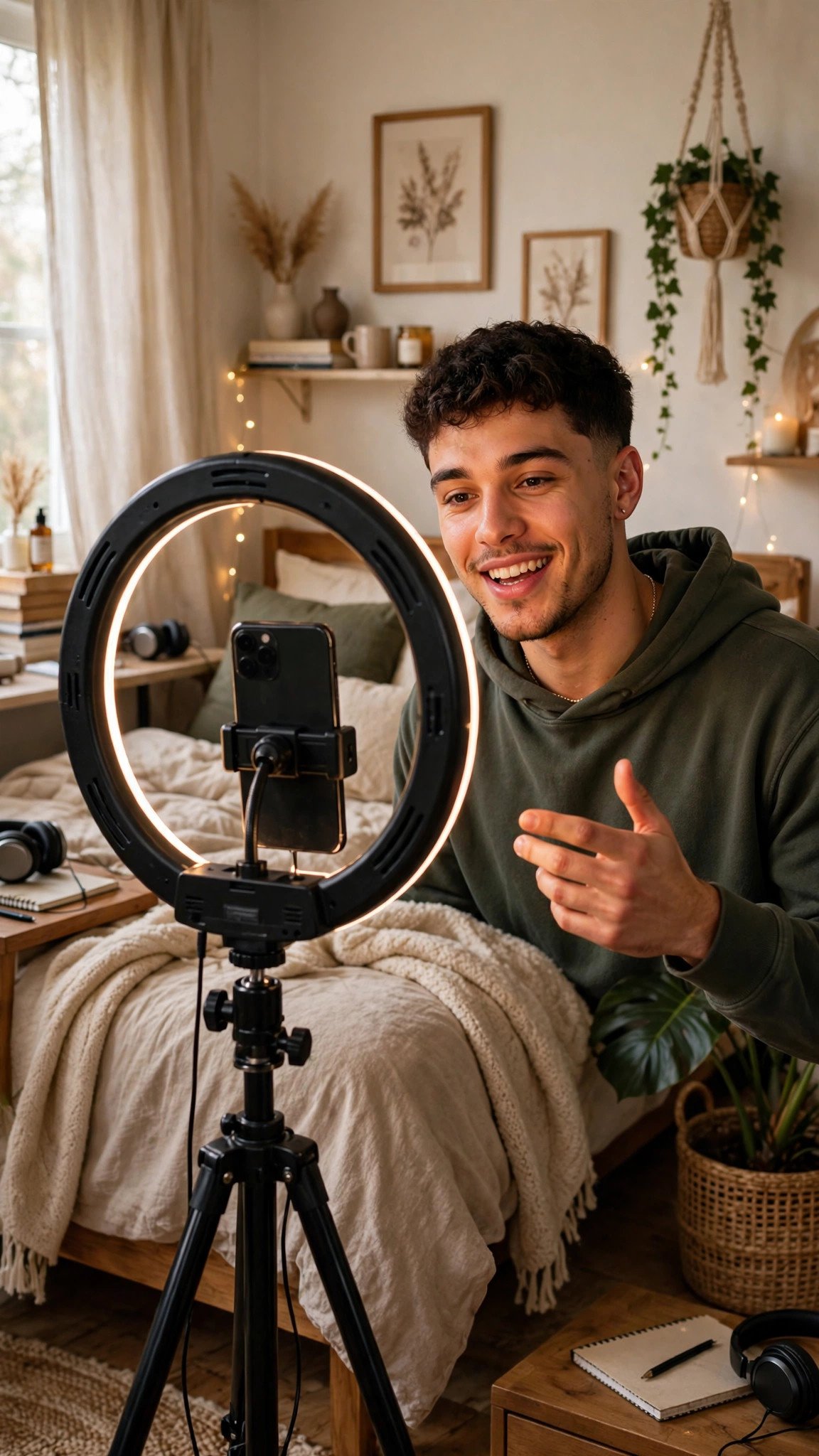
Want to try the format? The best POV videos follow a simple recipe:
- Start with a hook: “POV:” plus a scenario people instantly recognize.
- Keep it short: 15 to 30 seconds is the sweet spot.
- Use the camera as eyes: film what the viewer would actually see.
- Add text overlays: dialogue or narration in captions sells the scenario.
- End with a punch: a twist, a joke, or a relatable sigh.
POV Examples: Famous Formats
A few scenarios that became entire genres:
- “POV: you’re the main character walking through the airport” (the main-character trend)
- “POV: your mom calls your full name” (universal fear, instantly understood)
- “POV: it’s 3am and you’re thinking about that embarrassing thing from 2015”
- “POV: the group project member who did nothing wants credit”
Notice how each one casts the viewer in a role they have already lived. That recognition is the whole trick.
POV in Texting vs POV in Videos
Outside of TikTok, POV goes back to its original job: meaning “opinion” or “viewpoint.”
- Texting: “From my POV, we should just leave early.” (my perspective)
- Debate: “I get your POV, but here’s mine.” (I understand your view)
- Video caption: “POV: you finally get it.” (you are in the scene)
Context makes it obvious. If there is a video attached, it is the TikTok meaning. If it is a sentence about an opinion, it is the classic meaning. Merriam-Webster covers both senses in its entry for POV, defining it as an abbreviation for point of view.

Common POV Mistakes
- Labeling a normal video as POV: if the viewer is not placed in a scenario, it is not a POV, it is just a video.
- Filming in third person: a POV shot from across the room breaks the illusion. The camera is the viewer’s eyes.
- Overexplaining the setup: “POV:” should do the heavy lifting. Let the scene speak.
- Using POV for opinions in captions: “POV: pineapple pizza is bad” is not a scenario, it is a take. Label it accordingly.
POV Synonyms and Related Terms
- “Perspective” – the formal word for the same idea
- “First-person” – the camera-style version
- “Hot take” – the opinion version
- “Main character” – the TikTok cousin trend
- “Roleplay” – the acting version of POV videos
Why POV Videos Are So Addictive
There is real psychology behind the format. POV videos trigger recognition: your brain spots a familiar scenario and rewards you for getting it. They also create instant immersion, which is why a 20-second clip can feel more vivid than a two-minute vlog. Add the comment section, where thousands of strangers confirm “this happened to me too,” and you get a perfect loop of validation. Creators love POVs because they are cheap to film and endlessly remixable. Viewers love them because every scroll might cast them as the main character.
POV FAQs
What does POV mean on TikTok?
It means “point of view.” POV videos place the viewer inside a scenario, filmed from their eyes.
What does POV mean in texting?
It means someone’s viewpoint or opinion, as in “from my POV.”
Who started the POV trend?
No single creator invented it, but it became a defining TikTok format around 2020.
How long should a POV video be?
15 to 30 seconds works best. Short enough to rewatch, long enough to land the joke.
Is POV only on TikTok?
No. The format spread to Instagram Reels, YouTube Shorts, and Snapchat.
What is a POV shot in movies?
The same idea, older: a camera angle showing what a character sees, used in films for decades.
Key Takeaways
- POV means “point of view,” the position something is seen from.
- On TikTok, POV videos cast the viewer inside a scenario.
- In texting, POV usually means opinion or perspective.
- Great POV videos are short, recognizable, and end with a punch.
- The format works because viewers instantly recognize the scenario.
Explore More Word Meanings:
- OTP Meaning: What Does OTP Mean in Fandom?
- TBH Meaning: What Does TBH Mean in Texting?
- HMU Meaning: What Does HMU Mean in Texting?

Hi, I’m Claire Morgan, a Senior Language Content Specialist at Hublioo.com. I have 5+ years of experience creating clear and easy-to-understand content about word meanings, slang, acronyms, phrases, and modern English usage. My goal is to simplify complex language and help readers understand words with confidence through accurate, well-researched, and reader-friendly explanations.