
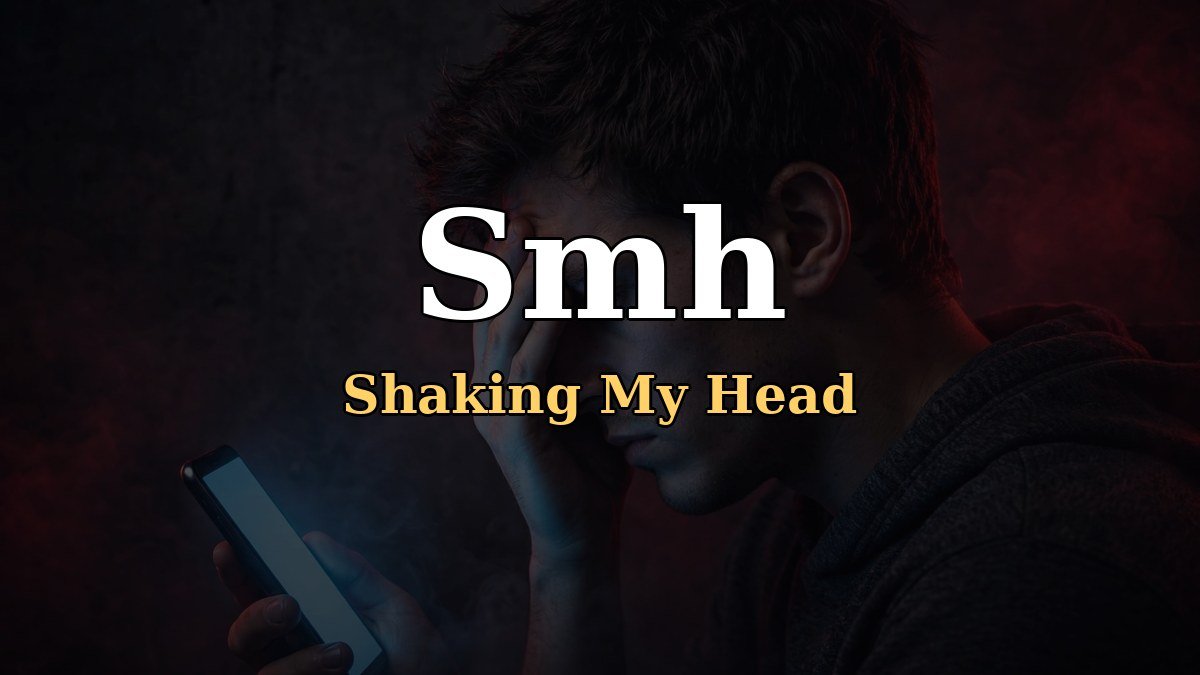
SMH Meaning in One Sentence
Quick Answer: SMH stands for “shaking my head.” It is the three-letter symbol of disappointment, disbelief, or secondhand embarrassment. People type it when words feel like too much effort for how done they are with a situation.
Key Facts
- Stands for: “Shaking my head”
- Means: Disappointment, disbelief, or secondhand embarrassment
- Origin: Early 2000s chat rooms and instant messaging
- Tone: Mildly judgmental or sympathetic - context decides
- Best use: As a reaction, standalone or inside a sentence
What Does SMH Stand For?
SMH is an initialism for “shaking my head,” describing the physical headshake you do when something is too ridiculous, sad, or frustrating to respond to properly. It captures a whole body language in three keystrokes. The dictionary entry lists it as informal slang for exactly this headshake reaction.
Unlike most slang, SMH does not hide a vulgar phrase. It is clean, safe for work, and understandable across generations, which is a big reason it survived while flashier acronyms faded.
Where Did SMH Come From?
SMH emerged in the early 2000s chat-room era, alongside classics like LOL and BRB. It first showed up in instant messenger conversations and forums, where typing out “I am shaking my head in disbelief at what you just said” was simply too long.
By the 2010s it had jumped to Twitter, where the character limit made it perfect, and then to every other platform. Today it is one of the most universally understood pieces of internet slang in English, used by teens, parents, and brands alike.
Why People Type SMH Instead of Using Words
SMH does something full sentences struggle with: it delivers judgment and emotion at the same time, without committing to either too strongly. Saying “I am disappointed in you” starts a fight. Typing “smh” ends the topic with a shrug.
It also works as a pressure valve. When a friend sends drama, a coworker forwards nonsense, or a celebrity does something wild, SMH lets you react without getting dragged into a long discussion. It is the texting equivalent of a sigh.
How to Use SMH in a Conversation
SMH is almost always a reaction. Drop it right after the thing that caused the headshake:
- Reacting to bad decisions: “He texted his ex at 2am again.” / “smh”
- Commenting on news: “This airline lost my luggage twice in one trip.” / “SMH, that’s unreal.”
- Playful roasting: “I just spilled coffee on my white shirt before the interview.” / “smh, classic you.”
- Group chat venting: “The meeting could have been an email.” / “smh every single time.”
It works standalone or tucked into a sentence: “smh at people who do that” reads naturally. All caps (SMH) adds emphasis; lowercase (smh) feels more tired and resigned. It also pairs with quick check-ins: if a friend is late, you might first ask WYA and then reply smh to the excuse.

SMH Examples: Texts, Comments, and Tweets
A few realistic sightings:
- Tweet: “My package said ‘delivered’ but it’s nowhere to be found. SMH.”
- Text: “Mom: did you eat the leftovers I was saving / You: smh I thought they were mine”
- Comment: “Bro really argued with the GPS and got lost. smh”
- Group chat: “Professor moved the deadline UP instead of back. smh”
When SMH Is Sympathetic vs Judgmental
SMH has two emotional gears, and misreading them causes real confusion.
Sympathetic SMH means “I feel for you.” Your friend got stood up, and your “smh” says “that person is awful, you deserved better.” It is solidarity, delivered dryly.
Judgmental SMH means “I can’t believe you did that.” Aimed at the person who caused the mess, it carries disappointment and a hint of “you should have known better.”
The difference is usually obvious from who the SMH is pointed at. When in doubt, add context: “smh, people are the worst” (sympathetic) vs “smh, you knew better” (judgmental).
SMH Synonyms and Opposite Reactions
Same headshake energy, different words:
- Facepalm - the emoji version of SMH
- “I can’t” - the exhausted cousin
- “Unbelievable” - the formal version
- “Bruh” - the Gen Z equivalent
- “Anyway” - SMH with the conversation closed
The opposite of SMH is enthusiasm: “let’s go,” “W,” “proud of you.” Where SMH shakes the head side to side, hype nods it up and down.
What to Reply When Someone Says SMH
If someone SMHs at your story, do not panic. Most of the time it is light. Good replies:
- Own it: “I know, I know. Don’t remind me.”
- Laugh along: “lmao fair, I deserve that.”
- Explain: “In my defense, the GPS lied to me.”
If the SMH feels genuinely judgmental, a simple “harsh but fair” defuses it. And if someone spams SMH under everything you post, take the hint and ask what is really bothering them.
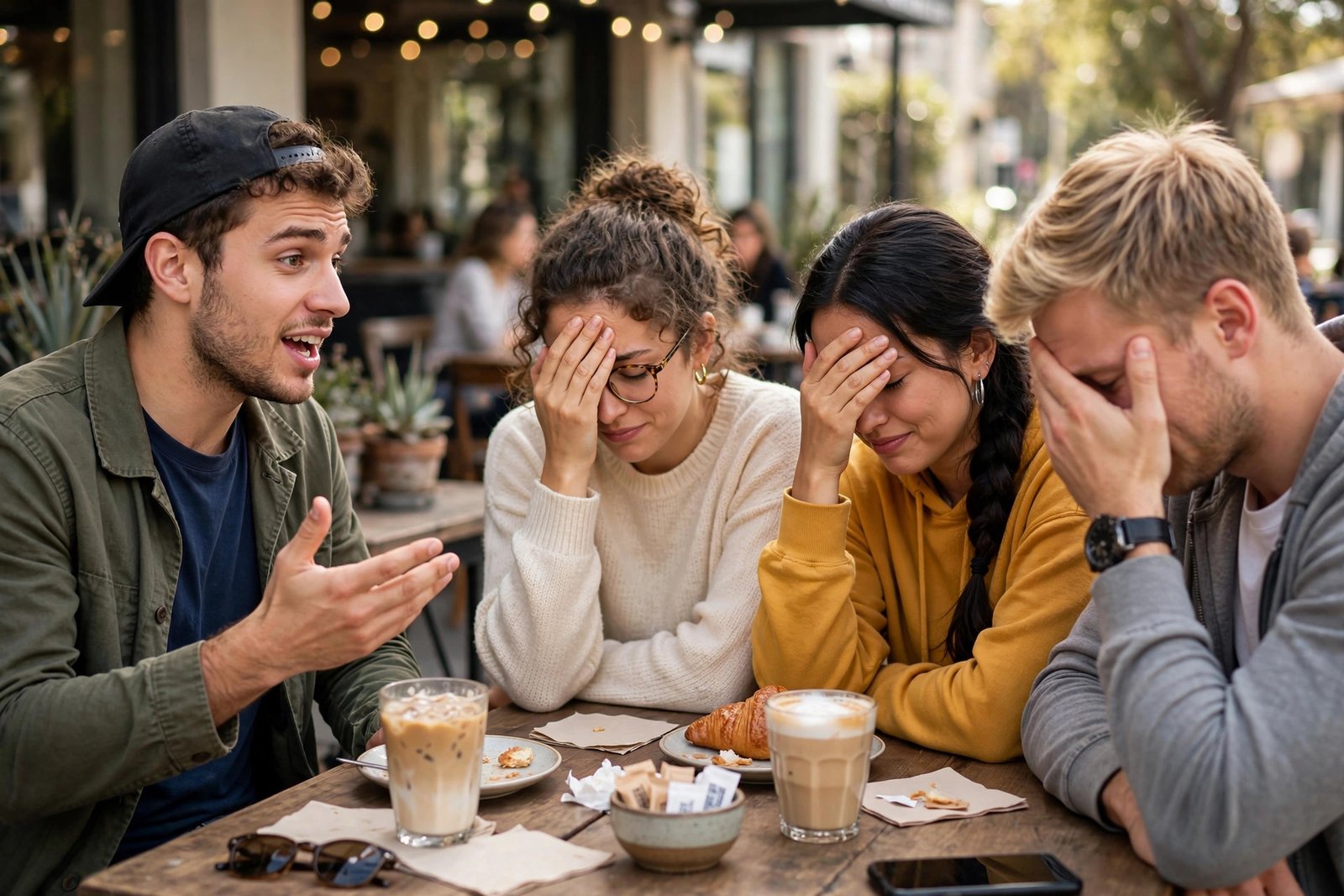
SMH vs SMDH vs SMFH: The Headshake Family
SMDH stands for shaking my damn head. It keeps the same headshake meaning as SMH, but the extra word turns up the frustration. Use it when a plain SMH feels too mild for the moment, such as a repeated mistake or a story that gets worse with every detail.
SMFH is stronger still. It is the vulgar version of the family, so it belongs only in private chats with close friends who know your tone and will not take it the wrong way. Keep it out of work chats, family groups, and any conversation with someone you do not know well.
When you are unsure which one fits, choose SMH. It lands the point without raising the temperature, and it stays safe in almost any chat. A short, honest note in the style of TBH can add the same clarity without extra heat, which is why plain SMH remains the best default.
SMH FAQs
What does SMH mean in texting?
It means “shaking my head,” expressing disappointment, disbelief, or embarrassment.
Is SMH rude?
Usually not. It can be mildly judgmental, but it is clean language and widely accepted, even at work.
What is the difference between SMH and SMDH?
SMDH adds a word: “shaking my damn head.” Same meaning, stronger emphasis, slightly vulgar.
Can I use SMH in professional messages?
In casual work chats, yes. In formal emails, write the full thought instead.
Is SMH still popular?
Very. It has been in steady use for 20 years and shows no signs of fading.
What does “smh my head” mean?
It is a redundant joke version: “shaking my head my head.” People say it for humor.
What does SMH mean from a guy?
It usually means the same thing it means from anyone else: disappointment, disbelief, or sympathy. Read the context to tell which one. Sent after your story, it often means he feels for you. Sent after his own mistake, it is usually self-deprecating humor.
Is SMH passive aggressive?
It can read that way, especially as a bare reply to a serious message, because it leaves the feeling unsaid. If you want to avoid that tone, add a few words, such as “smh, that is rough” for sympathy or “smh, I told you” only when you are joking with a close friend.
SMH vs facepalm emoji: which should I use?
Both show the same headshake reaction. SMH works best in text, where it reads as a quick verdict. The facepalm emoji works best when you want the reaction to look playful or visual, such as in a comment thread or a light group chat.
Explore More Word Meanings
Conclusion
- SMH means “shaking my head,” signaling disappointment or disbelief.
- It is clean, universal slang from the early 2000s chat era.
- Use it as a reaction to bad news, bad decisions, or pure nonsense.
- It can be sympathetic (“poor you”) or judgmental (“you knew better”).
- Synonyms include facepalm, “bruh,” and “I can’t.” The opposite is hype like “W.”
For the full entry, see the dictionary definition.

Hi, I’m Claire Morgan, a Senior Language Content Specialist at Hublioo.com. I have 5+ years of experience creating clear and easy-to-understand content about word meanings, slang, acronyms, phrases, and modern English usage. My goal is to simplify complex language and help readers understand words with confidence through accurate, well-researched, and reader-friendly explanations.