Mk Meaning: The Short Version
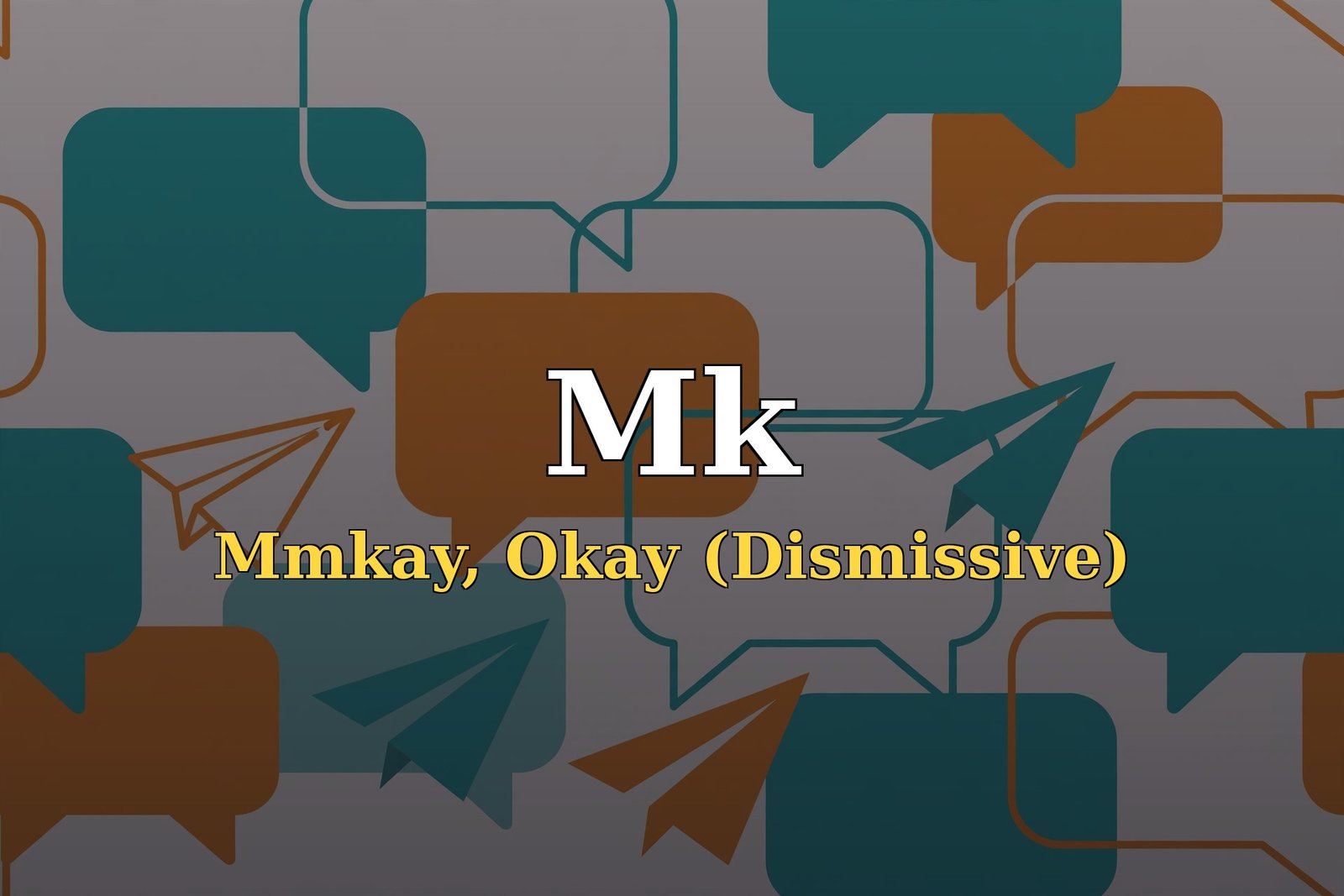
“Mk” means “mmkay” or “okay”, but said with attitude. It is the texting equivalent of a flat, unimpressed nod. Two letters that can mean genuine agreement, bored acknowledgment, or thinly veiled annoyance, depending entirely on context and punctuation. Mastering the difference between a friendly “mk” and a furious “mk.” is a core life skill of the group chat era.
What Does Mk Mean in Texting?
At its simplest, mk = okay. It is a lazy, low-effort acknowledgment, the texter heard you, registered it, and moved on. But mk carries a tone that plain “ok” does not: it is drier, cooler, and slightly dismissive.
Think of it as a spectrum. On one end, “mk” between close friends is just efficient, no drama, just agreement. On the other end, “mk.” with a period from someone you just argued with is a conversation ender wrapped in two letters.
Where Did “Mk” Come From?
Mk is a phonetic spelling of “mmkay”, the drawn-out, slightly sarcastic “okay” popularized by South Park’s Mr. Mackey (“mmkay?”) in the late 1990s. The character’s catchphrase became a cultural shorthand for condescending agreement, and texting compressed it to two letters.
By the 2010s, “mk” was standard in texting and social media, and in 2026 it ranked among the most-searched texting acronyms on Google. The Mr. Mackey DNA is still there: mk always carries a hint of “I hear you, and I have opinions about it.”
The Many Moods of Mk: A Tone Guide
Same two letters, wildly different meanings. Here is how to read them:
| What You See | What It Means | The Vibe |
|---|---|---|
| mk | Okay, got it | Neutral, casual, fine |
| mk. | Okay (conversation over) | Cold, annoyed, done |
| mkk | Okay! (extra k = extra warmth) | Friendly, playful |
| mk!! | Yes! Absolutely! | Enthusiastic, rare |
| …mk | I guess. Fine. | Resigned, skeptical |
| MK (caps) | OKAY. Noted. | Passive-aggressive, proceed carefully |
The rule of thumb: punctuation and extra letters change everything. A period is a weapon. An extra k is a hug.

Mk Meaning in Different Contexts
Between friends: Probably harmless. Your best friend sending “mk” to your dinner plan usually just means “cool, noted” and not “I hate this plan.” Context is everything.
From a crush: Trickier. A lone “mk” after a long, vulnerable message can feel like a rejection. But if they usually text short, it may mean nothing. Look at the pattern, not one message.
After an argument: Almost always a shutdown. “Mk.” is the digital equivalent of turning away mid-sentence.
At work: Risky. In professional settings, “mk” reads as curt or dismissive. Use “Got it, thanks” or “Sounds good” instead, unless your team is extremely casual.
Is Mk Rude or Dismissive?
Short answer: it depends. Between close friends, no. From a stranger, a boss, or mid-argument, yes, it can read as dismissive. The difference is relationship and timing, not the letters alone.
That ambiguity is why mk works so well as a passive-aggressive weapon. The sender can always claim “I just meant okay”, while the receiver feels the chill. Tone is in the eye of the receiver.
How to Use Mk Without Sounding Rude
Want to use mk and stay likable? Follow these rules:
Do:
- Use it with close friends who know your tone
- Add warmth when needed: “mk, sounds good!” or “mkk”
- Match the energy of the conversation
Do not:
- Use it as your only reply to a long, emotional message
- Send “mk.” with a period during a disagreement unless you mean to end it
- Use it at work, with clients, or with your boss

Mk vs OK vs K: The Effort Scale
Here is the brutal hierarchy of texting acknowledgment, from most to least effort:
- “Okay! Sounds great, thank you!” (maximum effort, maximum warmth)
- “Okay” (polite, normal)
- “Ok” (casual, fine)
- “mk” (minimal effort, cool, slightly detached)
- “k” (one letter, nuclear-level dismissal)
Mk sits just above k on the effort scale, which is exactly why it feels colder than ok. You typed two letters, but you clearly did not try very hard.
How to Reply When Someone Sends “Mk”
Got hit with a “mk” and not sure what to do? Try this:
- If it is a friend: Ignore it. They probably just meant okay.
- If it is mid-argument: Give it space. Replying “what’s wrong?” to a “mk.” will escalate things.
- If it is a crush: Do not double-text. Wait and see if the pattern continues.
- If you need a real answer: Ask a direct question: “Are we good with Friday, or do you want to change it?”
Mk Synonyms: Other Ways to Say It
If you want to say “okay” without the attitude, try:
- Got it (neutral, professional)
- Sounds good (warm, clear)
- Sure thing (friendly)
- Alright (casual, but warmer than mk)
- Bet (Gen Z agreement, enthusiastic)
Common Mistakes With Mk
1. Using mk with your boss. Just do not. “Got it” takes two seconds longer and saves your reputation.
2. Reading too much into one mk. A single short reply is not a breakup. Patterns matter more than one text.
3. Sending “mk.” when you mean “mk”. That period changes everything. If you do not mean to sound cold, skip it.
Mk vs Mmkay vs Mmm: Same Sound, Different Message
These three sound alike, but they send very different messages. Do not treat them as interchangeable.
- Mk is the short, written form. It means okay, often flat or dismissive, and its tone depends on punctuation and context.
- Mmkay is the drawn-out spoken form. It sounds like a slow, knowing okay, and it often carries a sarcastic or condescending edge, as in “Mmkay, sure.”
- Mmm is not agreement at all. It is a hum that can mean thinking, hesitation, enjoyment, or skepticism, depending on the sound and the situation. “Mmm” while tasting food means enjoyment, while “Mmm” after a weak excuse often means doubt.
In short: mk answers, mmkay judges, and mmm hesitates. If you want clear agreement, write “Sounds good” instead of relying on a sound-alike.
Mk FAQs
What does mk mean in texting?
Mk means “mmkay” or “okay”, usually said with a flat, unimpressed tone. It can mean genuine agreement or a dismissive shutdown, depending on context.
Is mk rude?
It can be. Between friends, it is usually fine. After an argument or at work, it often reads as dismissive or passive-aggressive.
What does mk mean from a girl?
The same as from anyone: it depends on context. A lone “mk” after a long message may mean disinterest, but if she texts short in general, it may mean nothing at all.
What is the difference between mk and k?
Both are low-effort, but k is colder. Mk at least spells out a sound, while k is a single letter that often reads as a shutdown.
What does mk mean on Snapchat?
On Snapchat, mk means the same as in texting: a casual, often flat “okay”. The platform does not change the meaning.
Should I reply to a mk?
Only if you need to. If the conversation is done, let it end. If you need a real decision, ask a direct question instead of chasing the mk.
What does mk mean from a crush vs from a friend?
From a friend, mk usually means a casual okay with no hidden message, especially if they text short with everyone. From a crush, a lone mk after a long or personal message can feel distant, so check the pattern: if their replies are usually longer and suddenly turn to mk, they may be pulling back, while a consistently short texter may simply mean okay.
What is the difference between mk and kk?
Mk is flat and can sound dismissive, while kk is usually warmer and more playful. Kk reads as a friendly, upbeat okay, often used between friends, whereas mk leans cooler and more detached. If you want to sound friendly, kk is the safer choice.
Is mk passive-aggressive at work?
Yes, it often reads that way at work. Colleagues and managers usually expect a fuller reply, such as “Got it, thanks” or “Sounds good.” A lone mk can look curt or dismissive in a professional thread, so save mk for casual chats with close coworkers.
Conclusion
Mk = mmkay, but make it texting. Two letters, infinite attitude. Use it wisely, read the punctuation, and when in doubt, just type “Sounds good” instead.
Mk is the ultimate low-effort reply: efficient between friends, dangerous after arguments, and a career risk at work. Master the tone, and you will never misread a “mk.” again.
For the dictionary sense of the agreement behind it, see agreement.

Hi, I’m Claire Morgan, a Senior Language Content Specialist at Hublioo.com. I have 5+ years of experience creating clear and easy-to-understand content about word meanings, slang, acronyms, phrases, and modern English usage. My goal is to simplify complex language and help readers understand words with confidence through accurate, well-researched, and reader-friendly explanations.