Home / Word Meanings / Deplorable Meaning: Simple Definition, Examples, Synonyms & Antonyms

Deplorable Meaning: Simple Definition, Examples, Synonyms & Antonyms

Deplorable Meaning

Have you ever heard someone describe an action, situation, or behavior as deplorable and wondered exactly what the word means? The word can sound formal or strong, but its basic meaning is easy to understand.

Deplorable meaning is something that is very bad, shameful, or deserving of strong disapproval. It is often used when a person wants to say that something is not simply wrong or unpleasant but seriously unacceptable.

For example, a cruel act toward an animal may be called deplorable. A school that treats students unfairly might be described as having deplorable conditions.

The word can describe behavior, actions, conditions, or situations that people strongly criticize.

In this guide, you will learn the simple definition of deplorable, how to pronounce and use it, its synonyms and antonyms, common mistakes, word history, and many everyday examples.

Quick Answer: What Does Deplorable Mean?

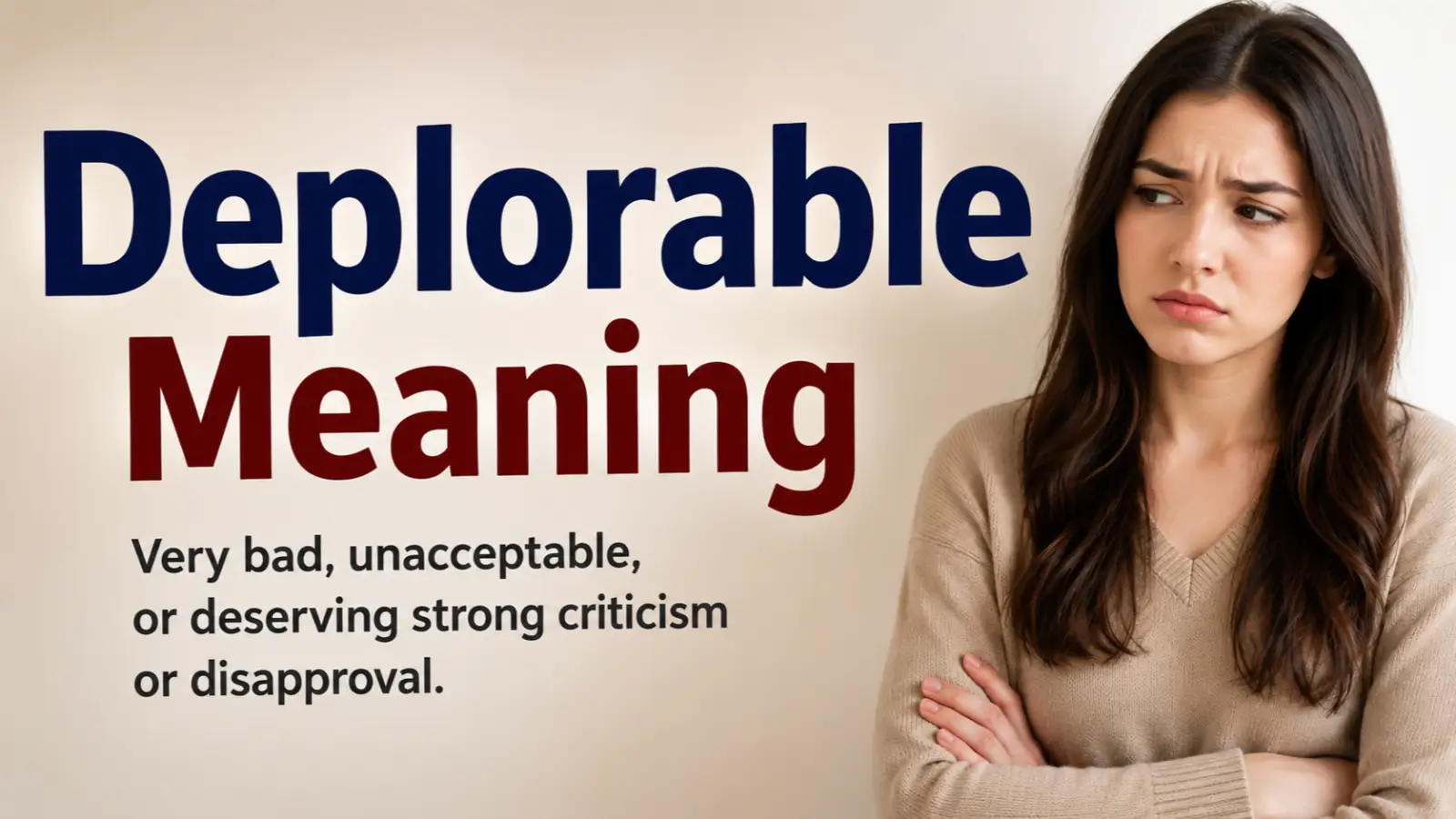
Deplorable means very bad, unacceptable, or deserving strong criticism or disapproval.

In simple English, if something is deplorable, it is so bad that people feel it should be strongly criticized.

For example:

  • The treatment of the animals was deplorable.
  • The building was in deplorable condition.
  • His rude behavior was deplorable.

The word usually carries a strong negative feeling. Calling something deplorable means you believe it is seriously wrong, shameful, or unacceptable.

WordSimple MeaningFeeling
DeplorableVery bad or unacceptableStrongly negative
BadNot goodNegative
UnacceptableNot okay or allowedStrongly negative
ShamefulCausing shame or embarrassmentStrongly negative
TerribleExtremely badStrongly negative

Deplorable Meaning and Definition

The adjective deplorable describes something that deserves strong disapproval, criticism, or regret.

A simple definition is:

Deplorable = extremely bad, unacceptable, or worthy of strong criticism.

The word is stronger than ordinary words such as bad, poor, or unpleasant. When someone uses deplorable, they are making a serious judgment about something.

For example, saying:

“The service was bad.”

only tells us that the service was not good.

But saying:

“The service was deplorable.”

suggests that the service was extremely poor and that the situation deserves serious criticism.

The word can describe both actions and conditions.

An action can be deplorable when it is cruel, dishonest, unfair, or deeply wrong. A condition can be deplorable when it is extremely poor, unsafe, dirty, or unacceptable.

For example:

“The workers were forced to live in deplorable conditions.”

Here, deplorable describes the conditions. It tells us that the living conditions were extremely poor and unacceptable.

What Does Deplorable Mean in Simple English?

In very simple English, deplorable means “very bad and not acceptable.”

Think of a scale:

okay → bad → very bad → deplorable

The word is normally used when something goes beyond being simply disappointing. It suggests that the situation deserves strong disapproval.

Imagine a student accidentally forgetting a pencil. That would not normally be called deplorable.

Now imagine someone deliberately bullying another student every day. That behavior could reasonably be described as deplorable because it is seriously wrong and deserves criticism.

The important idea is strong disapproval.

When you see the word deplorable, ask yourself:

“Is this being described as seriously bad or unacceptable?”

If the answer is yes, deplorable may be the right word.

Deplorable Meaning in a Sentence

The meaning of deplorable becomes easier when you see it in complete sentences.

The hospital was criticized for its deplorable conditions.

This means the hospital’s conditions were extremely poor and unacceptable.

The teacher called the bullying behavior deplorable.

This means the teacher strongly disapproved of the bullying.

The report described the workers’ living conditions as deplorable.

This means the living conditions were extremely poor and deserving of criticism.

It was deplorable to treat the older residents so disrespectfully.

Here, deplorable shows strong disapproval of the disrespectful treatment.

The town’s roads were in deplorable condition after years of neglect.

In this sentence, deplorable means the roads were in very poor condition.

Notice that the word does not always describe a person’s character. It can describe behavior, treatment, conditions, services, situations, or actions.

Real-Life Examples of Deplorable

Understanding the word through everyday situations can make it much easier to remember.

Imagine a school where students are repeatedly bullied and school leaders ignore their complaints. Someone might say:

“The school’s response to bullying was deplorable.”

The speaker is saying that the response was not merely weak. It was seriously unacceptable.

Consider another example. A group of animals is kept without enough food, water, or space. A person who sees the situation might say:

“The animals were kept in deplorable conditions.”

Here, the word communicates strong concern and disapproval.

Now imagine a public building that has broken windows, unsafe floors, poor sanitation, and serious maintenance problems. Someone could describe it as being in deplorable condition.

The word can also describe personal behavior. If someone deliberately humiliates another person in front of a crowd, you might hear:

“That was deplorable behavior.”

These examples show why context matters. Deplorable is usually chosen when the speaker wants to make a strong negative judgment.

Deplorable Synonyms

A synonym is a word with a similar meaning. There are many words that can sometimes replace deplorable, but they do not all have exactly the same strength or tone.

Here are five useful synonyms:

SynonymSimple MeaningDifference
ShamefulCausing shame or embarrassmentOften focuses on behavior
DisgracefulVery wrong or dishonorableStrong and often moral
AppallingShockingly badEmphasizes shock
TerribleExtremely badMore common in everyday speech
UnacceptableNot okay or allowedFocuses on what should not be tolerated

Shameful

Shameful means something that should cause a person or group to feel shame.

Example:

“His treatment of the customer was shameful.”

This is close to deplorable, especially when discussing someone’s behavior.

Disgraceful

Disgraceful means very bad, dishonorable, or embarrassing.

Example:

“The dishonest behavior was disgraceful.”

This word often has a strong moral judgment.

Appalling

Appalling describes something extremely bad or shocking.

Example:

“The report revealed appalling living conditions.”

The focus is often on how shocking the situation is.

Terrible

Terrible simply means extremely bad.

Example:

“The weather was terrible.”

Unlike deplorable, terrible can describe ordinary unpleasant experiences and does not always suggest moral criticism.

Unacceptable

Unacceptable means something is not okay and should not be allowed or tolerated.

Example:

“That kind of behavior is unacceptable at school.”

This word is especially useful when discussing rules or standards.

Deplorable Antonyms

An antonym is a word with the opposite meaning. Since deplorable describes something extremely bad or unacceptable, its antonyms describe things that are good, acceptable, admirable, or worthy of approval.

Five useful antonyms are:

AntonymSimple Meaning
AdmirableWorthy of respect or praise
ExcellentExtremely good
AcceptableGood enough or allowed
PraiseworthyDeserving praise
CommendableDeserving approval or praise

For example:

Deplorable behavior means behavior that deserves strong criticism.

The opposite could be:

Commendable behavior means behavior that deserves praise.

Another comparison:

“The working conditions were deplorable.”

This means the conditions were extremely poor.

“The working conditions were excellent.”

This means the conditions were extremely good.

Understanding opposites can help you remember the strength of the word.

How to Use Deplorable Correctly

Deplorable is an adjective, so it describes a person, thing, action, or situation. It usually appears before a noun when you want to show that something is extremely bad or unacceptable.

For example, you might describe someone’s behavior as deplorable or say that a place is in deplorable condition. The word can also describe poor treatment or serious actions.

You can also use it after linking verbs such as is, was, are, and were.

For example:

“The situation is deplorable.”

“The conditions were deplorable.”

“His actions were deplorable.”

Another useful pattern is:

something + is/was + deplorable

For example:

“The treatment of the animals was deplorable.”

This means the treatment was extremely bad and deserved strong criticism.

Tip: Use deplorable when the situation is serious enough to deserve strong disapproval. For ordinary problems, words such as poor, bad, or unpleasant may sound more natural.

Deplorable vs. Deplored

The words deplorable and deplored look similar, but they have different grammatical roles and meanings.

Deplorable is an adjective. It describes something that deserves strong disapproval.

Deplored is the past tense and past participle of the verb deplore. It means strongly disapproved of or expressed sadness about something.

Compare these sentences:

“The behavior was deplorable.”

This means the behavior was extremely bad or unacceptable.

“The community deplored the behavior.”

This means the community strongly disapproved of the behavior.

The difference can be summarized like this:

WordPart of SpeechMeaning
DeplorableAdjectiveVery bad or deserving strong criticism
DeploreVerbTo strongly disapprove of something
DeploredVerbStrongly disapproved of something
DeploringVerb formStrongly disapproving of something

This distinction is useful because deplorable describes the thing, while deplore describes the reaction to it.

Deplorable vs. Terrible: What Is the Difference?

Deplorable and terrible both describe something very bad, but they are not always interchangeable.

Terrible is much more common in everyday conversation. It can describe almost anything unpleasant or very bad.

For example:

“I had a terrible headache.”

“The movie was terrible.”

“We had terrible weather.”

Deplorable is more formal and often expresses strong criticism.

For example:

“The prisoners were held in deplorable conditions.”

“The officials condemned the deplorable treatment of the workers.”

You would not normally say “I had a deplorable headache.” The word does not fit that context naturally.

A simple rule is:

Use “terrible” for general everyday situations. Use “deplorable” when something is seriously unacceptable or deserves strong criticism.

Deplorable vs. Disgraceful

Deplorable and disgraceful are close in meaning, but they can carry slightly different shades of meaning.

Its focuses on how bad, regrettable, or unacceptable something is.

Disgraceful often focuses more strongly on shame, dishonor, or a failure to meet moral standards.

For example:

“The living conditions were deplorable.”

This emphasizes how poor and unacceptable the conditions were.

“His dishonest behavior was disgraceful.”

This emphasizes the shame or dishonor associated with his behavior.

Both words are strong, but the best choice depends on what you want to emphasize.

Is Deplorable a Strong Word?

Yes. Deplorable is a strong negative word.

Calling something deplorable is more serious than simply calling it bad or poor. It suggests that the speaker believes the situation deserves strong criticism.

For example:

“The food was bad.”

This is a mild statement.

“The food was terrible.”

This is stronger.

“The conditions were deplorable.”

This is strong and often suggests that the conditions are unacceptable or deeply troubling.

Because of its strong meaning, you should not use deplorable for every small problem. If your computer takes a few seconds to start, calling its performance deplorable may sound exaggerated unless the performance is truly extremely poor.

Using strong words carefully makes your writing sound more natural and precise.

Common Mistakes With Deplorable

One common mistake is using deplorable for every situation that is simply unpleasant.

For example:

“The ice cream was deplorable.”

This sounds unusual unless the ice cream was truly awful in a way that deserves strong criticism.

A more natural sentence would be:

“The ice cream was terrible.”

Another mistake is confusing deplorable with deplore.

Incorrect idea:

“I deplorable his actions.”

The correct verb is:

“I deplore his actions.”

If you want to use the adjective, you could say:

“His actions were deplorable.”

A third mistake is assuming that deplorable always means morally evil. While it often describes behavior that is morally wrong or unacceptable, it can also describe extremely poor conditions.

For example:

“The roads were in deplorable condition.”

The roads are not morally wrong. They are simply in extremely poor condition.

Deplorable in Formal and Everyday English

The word deplorable is more common in formal writing, news reports, public statements, reviews, and serious discussions than in casual conversation.

In everyday speech, people often use words such as awful, terrible, horrible, or unacceptable.

For example, a friend might say:

“That service was terrible.”

A formal report might say:

“The report found that the service was deplorable.”

Both sentences communicate strong dissatisfaction, but the second sounds more formal.

This makes deplorable a useful word for essays, reports, formal discussions, and serious descriptions. Students can use it when they want to express strong disapproval clearly, but they should make sure the situation is serious enough to justify the word.

The Origin of the Word Deplorable

The word deplorable is related to the verb deplore, which means to strongly disapprove of something or to feel deep sadness about it.

The English word comes through French and ultimately traces back to Latin roots connected with deplorare, meaning to lament or deeply mourn.

Over time, deplorable developed its modern sense of something that is deeply regrettable, very bad, or deserving strong disapproval.

The historical connection to sorrow and regret helps explain why the word can carry more than a simple meaning of “bad.” It can suggest that something is so wrong or unfortunate that it causes strong sadness, regret, or criticism.

British vs. American English

Deplorable has essentially the same meaning in American and British English.

In both forms of English, it can mean:

very bad, unacceptable, or deserving strong criticism.

There is no major difference in spelling between American and British English. The word is spelled deplorable in both.

The main difference is not meaning but context. The word can appear in formal writing and serious commentary in both varieties of English.

For American students, the safest approach is to remember:

Deplorable = very bad or unacceptable and deserving strong disapproval.

Deplorable Examples for Students

Students may encounter deplorable in books, essays, news stories, or classroom discussions.

Here are several examples:

“The author describes the workers’ deplorable living conditions.”

This means the workers’ living conditions were extremely poor.

“The principal said that bullying was deplorable.”

This means the principal strongly disapproved of bullying.

“The characters were shocked by the deplorable treatment of the animals.”

This means the treatment was extremely bad and unacceptable.

“The city worked to improve the neighborhood’s deplorable housing conditions.”

This means the housing conditions were very poor.

“The report criticized the company’s deplorable safety practices.”

This means the safety practices were seriously unacceptable.

These examples also show that deplorable often appears with nouns such as conditions, treatment, behavior, actions, practices, conduct, and situation.

When Should You Use the Word Deplorable?

Use deplorable when you want to communicate strong disapproval of something seriously bad, unacceptable, or regrettable.

It works especially well when the situation involves:

Cruel behavior:
“The cruel treatment of the animals was deplorable.”

Unfair treatment:
“The unequal treatment of the students was deplorable.”

Very poor conditions:
“The workers lived in deplorable conditions.”

Serious misconduct:
“The official’s dishonest actions were deplorable.”

Severe neglect:
“The building was left in a deplorable state.”

If the situation is only slightly disappointing, choose a milder word. Good writing is not about using the strongest word possible. It is about choosing the word that fits the situation accurately.

FAQs About Deplorable Meaning

What is the simple meaning of deplorable?

Deplorable means very bad, unacceptable, or deserving strong criticism. It is a strong negative adjective used for serious problems, behavior, actions, or conditions.

Is deplorable a positive or negative word?

Deplorable is a negative word. It expresses strong disapproval. If someone calls an action deplorable, they are saying that the action is seriously wrong, unacceptable, or worthy of criticism.

Is deplorable the same as terrible?

They are similar, but not exactly the same. Terrible is a common word for something extremely bad, while deplorable is more formal and often suggests that something deserves strong disapproval or criticism.

What is a synonym for deplorable?

Useful synonyms include shameful, disgraceful, appalling, terrible, and unacceptable. The best synonym depends on the sentence and the exact feeling you want to express.

What is the opposite of deplorable?

Common antonyms include admirable, excellent, acceptable, praiseworthy, and commendable. These words describe something good, respectable, or worthy of approval.

Is deplorable a formal word?

Yes. Deplorable is more common in formal writing, news, reports, essays, and serious discussions than in casual conversation. However, it can still be used in everyday speech when someone wants to make a strong criticism.

Conclusion

The simplest deplorable meaning is very bad, unacceptable, or deserving strong criticism.

It is a strong adjective used when ordinary words such as bad or poor do not fully express the seriousness of a situation.

You can use deplorable to describe harmful behavior, unfair treatment, poor conditions, serious misconduct, or other situations that deserve strong disapproval.

Remember that deplorable is an adjective, while deplore is a verb.

For example, you can say, “The treatment was deplorable,” or “The community deplored the treatment.”

The word is also more formal than terrible or awful, so it works especially well in essays and serious writing.

When you see deplorable, think: “so bad or unacceptable that it deserves strong criticism.” That simple idea will help you understand and use the word correctly.

Leave a Reply

Your email address will not be published. Required fields are marked *