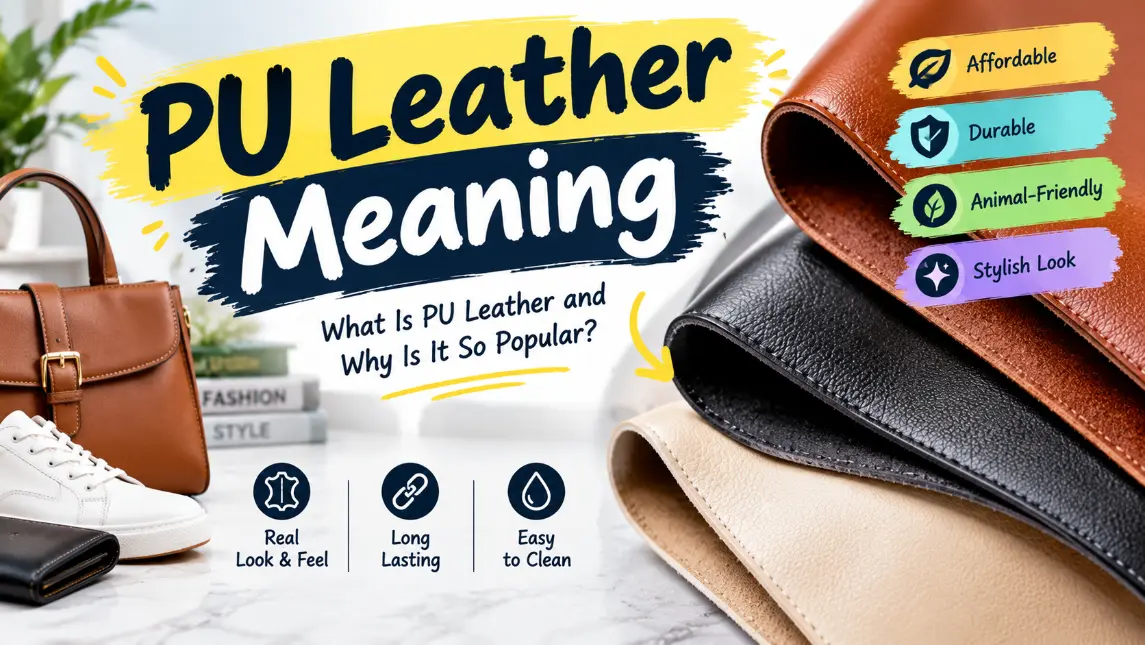
Quick Answer: PU leather (polyurethane leather) is a synthetic material made to look and feel like real leather — but it contains no animal hide. It’s cheaper than genuine leather, widely used in bags, shoes, jackets, and furniture, and is also called faux leather.
| Quick Fact | Detail |
|---|---|
| Term | PU leather |
| Stands for | Polyurethane leather |
| What it is | Synthetic leather-like material (polyurethane over fabric backing) |
| Real leather? | No — 100% synthetic, no animal hide |
| Also called | Faux leather, imitation leather, synthetic leather, vegan leather |
Is PU Leather Real Leather?
No — and this is the single most important thing to understand. PU leather contains zero animal hide. It’s a man-made material: a layer of polyurethane (a type of plastic polymer) applied over a fabric backing, textured and finished to mimic the look and grain of genuine leather.
The confusion is understandable, because the word “leather” is right there in the name and the resemblance can be convincing at first glance. But legally and materially, PU leather is as much “real leather” as a plastic plant is a real plant. If a product description says “genuine leather,” that’s animal hide. If it says “PU leather,” it’s synthetic — always check the label if it matters to you.
What Does PU Leather Mean?
Breaking the term down: PU stands for polyurethane, and leather describes what the material imitates. So “PU leather” literally means “polyurethane made to resemble leather.”
In practice, you’ll see it on:
- Bags and wallets — the most common use; affordable handbags are overwhelmingly PU.
- Shoes and boots — especially fast-fashion footwear.
- Jackets — “vegan leather jackets” are almost always PU.
- Furniture — sofas, office chairs, and car seats (often labeled “leatherette”).
- Accessories — belts, phone cases, watch straps.
It’s popular because it delivers the leather look at a fraction of the cost, with consistent color and texture that natural hide can’t always match. If you’ve ever bought affordable merch like a band tote or creator-branded wallet, there’s a good chance it was PU leather.
Where Did PU Leather Come From?
Polyurethane itself was developed in the 1930s–40s, but PU leather as a consumer material took off in the mid-to-late 20th century as manufacturers sought cheaper, more uniform alternatives to animal leather. Unlike earlier plastics that looked obviously fake, improved coating techniques let PU mimic leather grain convincingly.
Its rise tracks with two bigger trends: fast fashion (which needed cheap materials at scale) and growing ethical consumerism (which created demand for animal-free options). Today it’s a multi-billion-dollar material category — and the default “leather” in most products under a certain price point.
What Are the Pros and Cons of PU Leather?
An honest breakdown, because PU leather is neither amazing nor terrible — it’s a trade-off:
Pros:
- Affordable — often 5–10x cheaper than genuine leather.
- Animal-free — no hides involved, appealing to vegan and ethical buyers.
- Consistent — uniform color and texture, no natural flaws or scars.
- Easy to clean — wipes down with a damp cloth; doesn’t need conditioning.
- Lightweight — generally lighter than thick genuine leather.
Cons:
- Less durable — cracks and peels with age; won’t develop a patina or last decades like good leather.
- Plastic-based — it’s polyurethane, so it’s not biodegradable and sheds microplastics.
- Looks cheaper up close — the grain pattern often repeats artificially; experts can spot it instantly.
- Less breathable — can feel sweaty in shoes and jackets.
- Lower resale value — nobody pays a premium for used PU.
PU Leather vs. Real Leather: What’s the Difference?
| Feature | PU Leather | Real (Genuine) Leather |
|---|---|---|
| Material | Polyurethane over fabric | Animal hide, tanned |
| Price | Cheap | Expensive |
| Durability | 2–5 years; peels/cracks | Decades; ages with patina |
| Smell | Chemical/plastic | Distinctive rich leather scent |
| Feel | Uniform, sometimes plasticky | Natural grain variation, warm |
| Water | Resistant, wipes clean | Needs care; can stain |
| Ethics | Vegan-friendly, but plastic | Animal product, but biodegradable |
Quick spot-the-difference test: press the material — real leather wrinkles naturally like skin; PU often just dents. Smell it — real leather has an unmistakable rich scent PU can’t fake. And check the edge: real leather shows fibrous layers; PU shows fabric backing.
How Do You Use the Term “PU Leather”?
In conversation and shopping, the term works as a straightforward material label:
- “Is this bag real leather or PU leather?”
- “I bought a PU leather jacket — looks great for the price.”
- “The sofa is PU leather, so just wipe spills off.”
- “She only buys PU leather shoes for ethical reasons.”
Note: some sellers use euphemisms like “vegan leather,” “leatherette,” or just “leather-look” to avoid the word “plastic.” They all usually mean PU (or similar synthetics). There’s nothing wrong with PU leather — just know what you’re buying. A precious heirloom bag should probably be genuine; a trendy seasonal tote is PU’s natural habitat.
Frequently Asked Questions
Is PU leather vegan?
Yes, in the sense that it contains no animal products. However, some vegans avoid it for environmental reasons since polyurethane is a petroleum-based plastic. “Vegan” and “eco-friendly” aren’t the same thing.
How long does PU leather last?
Typically 2–5 years with regular use before cracking or peeling begins. Heat, sunlight, and friction accelerate the breakdown. It won’t age gracefully like genuine leather — it degrades.
Is PU leather the same as faux leather?
Essentially, yes. “Faux leather” is the umbrella term for all synthetic leathers; PU leather is the most common type under that umbrella. (PVC-based “vegan leather” is the other main kind.)
Can you tell PU leather from real leather?
Usually. Check the smell (chemical vs. rich), the grain (repeating pattern vs. natural variation), the edge (fabric backing vs. fibrous hide), and the price. If a “leather” bag costs $30, it’s PU.
Is PU leather waterproof?
Largely water-resistant — spills wipe off easily, which is a genuine advantage over real leather. But it’s not indestructible; prolonged soaking can still damage the backing. See Britannica on polyurethane for the material science.
Key Takeaways
- PU leather = polyurethane made to look like leather; it contains no animal hide.
- It’s cheap, consistent, easy to clean, and animal-free — but less durable and plastic-based.
- Also sold as faux leather, vegan leather, or leatherette.
- Spot it by the chemical smell, repeating grain pattern, and fabric backing.
- Great for affordable fashion; not a substitute for heirloom-quality genuine leather.
Read More Articles
🔮Brick and Mortar Meaning: Definition, Examples & Business Guide
🔮Intricate Meaning: Definition, Intricate vs Complex & Beautiful Examples

Hi, I’m Mia Walker, a Content Research Writer at Hublioo.com with 3+ years of experience in creating educational language content.
I enjoy breaking down complex words, internet slang, abbreviations, and everyday expressions into clear, practical explanations that anyone can understand.
My focus is on delivering original, easy-to-read, and well-organized content that helps readers expand their vocabulary and use English with greater confidence.