
Home / Word Meanings / Acrimony Meaning: Definition, Examples, Synonyms, and How to Use It

Acrimony Meaning: Definition, Examples, Synonyms, and How to Use It

Acrimony Meaning

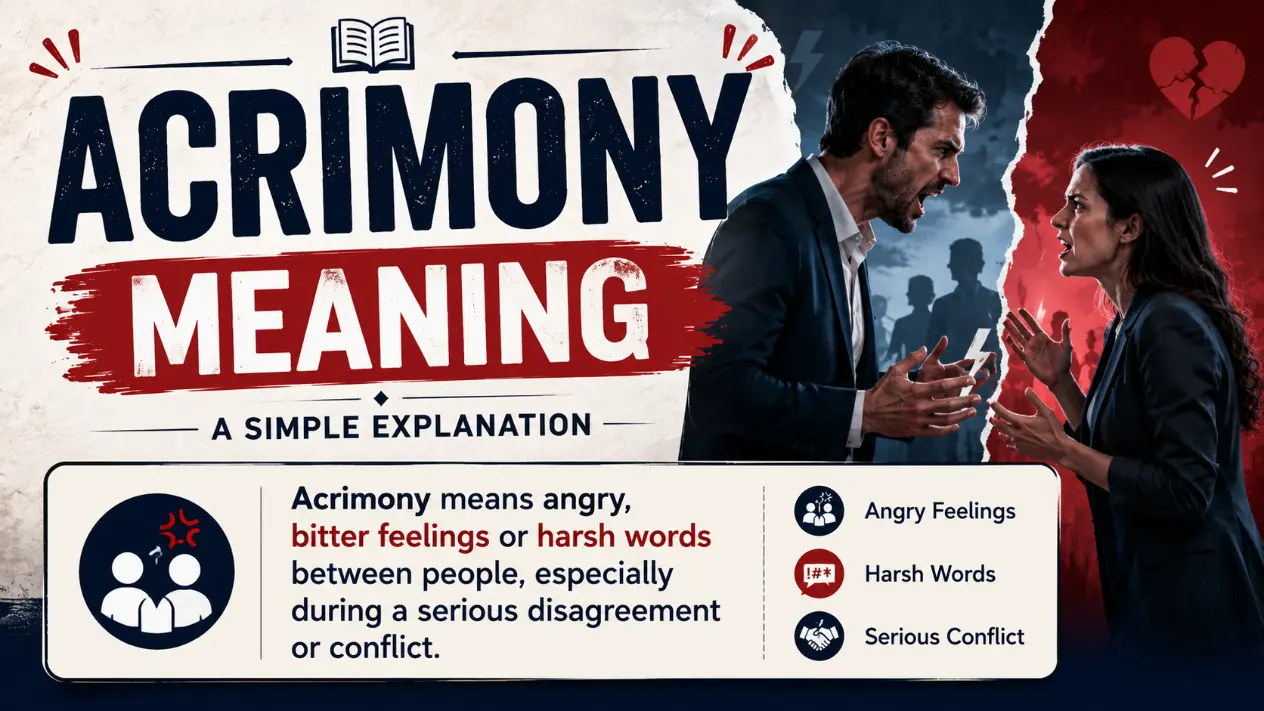
If you are searching for acrimony meaning, the word means angry, bitter feelings or harsh words between people, especially during a serious disagreement or conflict. It is often used to describe arguments, divorces, legal disputes, political conflicts, business disagreements, and difficult relationships.

Acrimony is a formal noun, so you are more likely to see it in news articles, books, legal discussions, essays, and serious writing than in casual conversation.

The word means more than simple anger. It suggests bitterness, resentment, hostility, or harshness connected to a conflict. In this guide, you will learn the meaning of acrimony in simple English, see useful examples, explore its synonyms and antonyms, and understand how it is used in relationships, law, and everyday writing.

Quick Meaning of Acrimony

Acrimony means angry and bitter feelings or words, especially between people involved in a disagreement or conflict.

For example:

The two neighbors settled their dispute without acrimony.

This means they resolved their disagreement without anger or bitterness.

Another example:

The divorce was marked by acrimony.

This means the divorce involved strong anger, bitterness, or harsh feelings.

A simple way to remember it is:

Acrimony = anger + bitterness + conflict

What Does Acrimony Mean?

The simplest way to understand acrimony is to think of a disagreement that has become emotionally bitter.

People can disagree without acrimony. For example, two coworkers may have different opinions about a project but still discuss the issue calmly.

When a disagreement turns into personal attacks, resentment, harsh words, or hostility, you can describe the situation as involving acrimony.

For example:

The negotiations continued despite growing acrimony.

This means the people involved were not simply disagreeing. Their conflict had become bitter and unpleasant.

Acrimony is commonly used when talking about:

  • Arguments
  • Divorces
  • Family conflicts
  • Legal disputes
  • Political disagreements
  • Business disputes
  • Public debates
  • Long-running conflicts

Acrimony in Simple English

In simple English, acrimony means strong anger and bitterness between people.

Imagine two family members who have argued about money for years. Whenever they discuss the issue, they become angry and say hurtful things.

You could say:

There was a lot of acrimony between the family members.

In everyday English, you could say:

The family members were very angry and bitter toward each other.

The word acrimony is useful because it expresses these ideas in one formal noun. It is especially helpful when describing a serious or unpleasant conflict.

Acrimony Meaning in a Relationship

In a relationship, acrimony describes strong anger, resentment, or bitterness between two people.

It does not necessarily mean that they are constantly shouting. Acrimony can appear through insults, cold remarks, blame, arguments, or an unwillingness to cooperate.

For example:

There was considerable acrimony between the former partners.

This suggests that the relationship ended with strong negative feelings.

The word is often used when discussing difficult divorces, but it can describe other relationships too, including friendships, family relationships, business partnerships, and relationships between coworkers.

What Is an Acrimonious Relationship?

An acrimonious relationship is a relationship marked by ongoing anger, bitterness, hostility, or harsh disagreements.

For example:

The former business partners had an acrimonious relationship after their company failed.

This means their relationship became bitter and hostile after the business problems.

Examples of Acrimony

Here are some natural examples that show how acrimony is used:

The meeting ended in acrimony.

The meeting ended with angry and bitter feelings.

The two sides reached an agreement without acrimony.

They solved their disagreement without becoming hostile or bitter.

Years of acrimony made it difficult for the family to reunite.

Long-lasting anger and bitterness made reconciliation difficult.

The political debate was filled with acrimony.

The debate contained a lot of angry or bitter language.

The former business partners still speak with acrimony about the failed company.

They still speak bitterly about what happened.

She responded to the criticism without acrimony.

She did not respond in an angry or bitter way.

Acrimony in a Sentence

Acrimony in a sentence usually describes the emotional quality of a disagreement, relationship, or conflict.

Common sentence patterns include:

There was acrimony between the two groups.

The dispute was settled without acrimony.

The negotiations were marked by acrimony.

Years of acrimony damaged their friendship.

The argument created more acrimony between the families.

Because acrimony is normally an uncountable noun, these forms are natural:

There was a lot of acrimony.

The discussion was full of acrimony.

They settled the matter without acrimony.

You would generally not say “three acrimonies” when referring to separate instances of bitterness.

What Is Acrimonious Behavior?

Acrimonious behavior is behavior that shows anger, bitterness, hostility, or harsh feelings during a conflict.

It can include:

  • Making insulting comments
  • Speaking harshly
  • Repeatedly blaming another person
  • Refusing to cooperate because of resentment
  • Turning disagreements into personal attacks

For example:

His acrimonious behavior made the negotiations more difficult.

This means his angry and bitter behavior made it harder for the people involved to reach an agreement.

Acrimony vs Anger

Anger is a broader word than acrimony.

Anger is a strong emotional reaction to something upsetting, unfair, or frustrating. It can be brief and may disappear quickly.

Acrimony usually suggests bitterness or hostility connected with conflict between people.

WordMain Idea
AngerA strong feeling of being upset or mad
AcrimonyAngry and bitter feelings, especially during conflict

For example, you might feel angry because your flight was canceled. That does not necessarily involve acrimony.

Acrimony is more likely when people have negative feelings toward one another during a serious or continuing disagreement.

Acrimony vs Bitterness

Bitterness is one of the closest everyday words to acrimony.

Bitterness can describe a lasting feeling of anger, disappointment, or resentment. Acrimony usually focuses more on bitter interaction between people, especially during a disagreement.

For example:

She felt bitterness after losing her job.

This focuses on her personal feeling.

The negotiations ended in acrimony.

This focuses on the bitter conflict between the people involved.

The two words overlap, but they are not perfect substitutes in every situation.

Acrimony vs Resentment

Resentment is anger or unfairness that someone continues to hold.

For example:

He still felt resentment toward his former employer.

This means he continued to feel upset about what happened.

Acrimony is often more visible in a conflict or exchange:

The two companies ended their partnership with considerable acrimony.

A useful distinction is:

Resentment can remain inside a person, while acrimony often appears in interactions between people.

Acrimony vs Hostility and Animosity

Hostility means unfriendly, aggressive, or opposing behavior.

Animosity means strong dislike or hostility toward another person or group.

Acrimony is closely related to both, but it places more emphasis on anger and bitterness expressed during a conflict.

WordSimple MeaningMain Focus
AcrimonyAngry, bitter feelings or wordsHeated disputes
AnimosityStrong dislike or hostilityLong-term opposition
ResentmentAnger someone continues to holdPersonal feelings
BitternessDeep anger or disappointmentLasting negative feelings
HostilityUnfriendly or aggressive behaviorOpposing behavior

Acrimony Synonyms

If you are looking for another word for acrimony, several words may work depending on the context.

Common synonyms include:

  • Bitterness
  • Anger
  • Resentment
  • Hostility
  • Animosity
  • Rancor
  • Ill will
  • Antagonism
  • Bad feeling

Bitterness is often the easiest everyday substitute.

Rancor usually suggests deep, lasting bitterness.

Animosity emphasizes strong dislike or hostility.

Resentment focuses on anger that someone continues to feel.

Hostility emphasizes unfriendly or aggressive behavior.

Acrimony Antonyms

There is no single perfect opposite of acrimony, but these words can express contrasting ideas:

  • Harmony
  • Peace
  • Agreement
  • Friendship
  • Cooperation
  • Goodwill
  • Understanding

For example:

The two sides reached an agreement without acrimony.

A contrasting idea would be:

The two sides worked together in a spirit of goodwill.

The best antonym depends on the context. Harmony or peace works well for the opposite of conflict, while goodwill or friendship can express the opposite of hostility.

Is Acrimony a Formal Word?

Yes. Acrimony is generally a formal word.

You may see it in:

  • News articles
  • Legal writing
  • Political reports
  • Academic writing
  • Books
  • Essays
  • Opinion pieces

It is less common in casual conversation.

For example, a friend might say:

They were really angry with each other.

A formal article might say:

The dispute was marked by considerable acrimony.

Both communicate a similar idea, but the second is more formal.

Common Phrases With Acrimony

Learning common phrases can make the word easier to use naturally.

Without acrimony means without anger or bitterness:

They ended their business relationship without acrimony.

With acrimony means with anger or bitterness:

The issue was discussed with considerable acrimony.

Amid acrimony means while strong conflict was present:

The agreement was announced amid political acrimony.

Acrimony between describes bitterness between people or groups:

There was growing acrimony between the two parties.

Acrimony over identifies the subject causing the conflict:

The families faced acrimony over the inheritance.

What Does Acrimonious Mean?

Acrimonious is the adjective form of acrimony. It means angry, bitter, hostile, or full of harsh feelings and words.

For example:

The two sides had an acrimonious debate.

They went through an acrimonious divorce.

The word is commonly used with:

  • Debate
  • Argument
  • Dispute
  • Divorce
  • Negotiations
  • Exchange
  • Relationship
  • Conflict

Remember:

Acrimony = noun

Acrimonious = adjective

So you can say:

There was acrimony during the debate.

Or:

It was an acrimonious debate.

Acrimony Meaning in Law

In law, acrimony refers to the anger, bitterness, hostility, or harsh conflict between people involved in a legal dispute.

It is particularly common when discussing:

  • Divorce cases
  • Family disputes
  • Lawsuits
  • Negotiations
  • Conflicts between opposing parties

For example:

The divorce was settled without acrimony.

This means the legal separation was handled without serious bitterness or hostility.

Another example:

The case was resolved despite considerable acrimony between the parties.

Here, acrimony describes the emotional conflict between the people involved.

It is important to note that acrimony is not the name of a specific legal offense or legal claim. It describes the emotional atmosphere surrounding a dispute.

Acrimony Meaning in Arabic

The best Arabic translation of acrimony depends on the context.

Common possibilities include:

  • مرارة — bitterness
  • ضغينة — resentment or grudge
  • عداء — hostility
  • مشاعر مريرة — bitter feelings

For example, when the focus is on deep resentment, ضغينة may fit better. When the focus is on hostility between groups, عداء may be more appropriate.

Therefore, there is no single Arabic word that perfectly matches every use of acrimony.

Acrimony Meaning in Chinese

The Chinese translation also depends on context.

Possible translations include:

  • 怨恨 — resentment or bitterness
  • 敌意 — hostility
  • 苦涩情绪 — bitter feelings

For example, 敌意 may fit when describing hostility between groups, while 怨恨 may be better when describing deep personal resentment.

The exact translation should therefore be chosen according to the sentence.

Acrimony Movie: What Does the Title Mean?

Acrimony is also the title of a 2018 American psychological thriller film directed by Tyler Perry.

The title uses the normal meaning of the word. It refers to the anger, resentment, bitterness, and hostility that develop within a troubled relationship.

Therefore, if someone searches for “acrimony movie” or “acrimony meaning movie,” they may be asking about the movie title rather than the dictionary definition.

In simple terms:

Acrimony as a word = bitter anger or resentment.

Acrimony as a movie title = a reference to the bitterness and conflict within the story.

Common Mistakes With Acrimony

One common mistake is assuming that acrimony simply means anger. That is too broad.

Acrimony normally adds the idea of bitterness or hostility connected with conflict.

For example:

I felt acrimony when I missed the bus.

This sounds unnatural because missing a bus usually causes frustration or annoyance.

A better sentence is:

I felt annoyed when I missed the bus.

But this works:

The two business partners developed considerable acrimony after the company failed.

Here, acrimony fits because it describes a bitter conflict between people.

Another mistake is confusing acrimony with acrimonious.

Remember:

Acrimony = noun

Acrimonious = adjective

When Should You Use Acrimony?

Use acrimony when you want to describe a serious disagreement involving anger, bitterness, or harsh feelings.

It works especially well when writing about conflicts between people or groups.

For example:

The negotiations continued despite growing acrimony.

You probably do not need the word for small everyday annoyances.

Instead of:

There was acrimony because my brother took my charger.

Say:

I was annoyed because my brother took my charger.

The second sentence sounds more natural because the situation is minor.

Frequently Asked Questions About Acrimony

1.What is the simple meaning of acrimony?

Acrimony means angry and bitter feelings or words between people, especially during a disagreement or conflict.

2.What is another word for acrimony?

Bitterness is one of the closest simple synonyms. Depending on the context, resentment, hostility, animosity, rancor, or ill will may also work.

3.What is acrimonious behavior?

Acrimonious behavior is angry, bitter, or hostile behavior, especially during a disagreement. It may include harsh words, personal attacks, blame, or refusal to cooperate.

4.What is an acrimonious relationship?

An acrimonious relationship is one marked by ongoing anger, bitterness, hostility, or frequent harsh disagreements.

5.What does acrimony mean in law?

In legal contexts, acrimony describes anger, bitterness, or hostility between people or groups involved in a dispute. It is commonly used when discussing divorces, lawsuits, negotiations, and other conflicts.

6.What are the antonyms of acrimony?

Common contrasting words include harmony, peace, goodwill, friendship, cooperation, agreement, and understanding.

7.Is acrimony a noun?

Yes. Acrimony is a noun, and it is normally used as an uncountable noun when referring to angry or bitter feelings.

8.What is the difference between acrimony and acrimonious?

Acrimony is a noun for angry and bitter feelings or words. Acrimonious is an adjective describing something that is angry, bitter, or hostile.

9.How do you pronounce acrimony?

In American English, acrimony is pronounced approximately AK-ruh-moh-nee.

10.What does acrimony mean in Arabic?

Depending on the context, acrimony can be translated as مرارة, ضغينة, or عداء, referring to bitterness, resentment, or hostility.

11.What does acrimony mean in Chinese?

Depending on the context, acrimony can be translated as 怨恨, 敌意, or another phrase describing bitter feelings or hostility.

12.What does acrimony mean in the movie?

In the movie Acrimony, the title refers to the bitterness, anger, resentment, and hostility that develop within a troubled relationship.

Conclusion

The acrimony meaning is angry, bitter feelings or words between people, especially during a serious disagreement. It is a formal noun often used when discussing divorces, legal disputes, political arguments, business conflicts, negotiations, and difficult relationships.

The closest everyday words include bitterness, resentment, hostility, animosity, rancor, and anger, but each has a slightly different focus. Acrimony is especially useful when you want to describe the bitter emotional atmosphere of a conflict, rather than simple anger.

The easiest distinction to remember is:

Acrimony = bitter anger or harsh feelings

Acrimonious = showing or involving that bitterness

Once you understand this difference, you can recognize and use acrimony more naturally in both everyday learning and formal English writing.

Leave a Reply

Your email address will not be published. Required fields are marked *